
Microneedling vs Skin Needling: What’s the Real Difference?
Microneedling vs Skin Needling: What’s the real difference between these two terms that seem to pop up everywhere online but are basically the same thing done by different clinics?
If you’ve ever sat in a dermatologist’s office, wondering which version is going to give you better results – whether one will make your skin look more radiant, work faster, or somehow magically erase scars – take a deep breath – you’re about to get a straight-up, no-fuss explanation, free of hype and empty promises.

Table of Contents

What These Treatments Actually Do (And Why They Work So Well)
Before we get too caught up in what to call them, let’s talk results. Honestly, no one really cares what they’re called as long as you can see the difference in your skin quality and your complexion improves.
Microneedling & skin needling work by creating tiny pinpricks in the skin’s surface, triggering a wound-healing response and encouraging the production of new collagen and elastin. This is basically a form of collagen induction therapy, which is a fancy way of saying it helps improve how quickly cells turn over and how well supported your skin is.
Here’s what that even means in real terms :
- Your collagen production goes up
- Your skin looks and feels tighter
- It takes less time for your skin to renew itself
- You get better absorption out of your skincare products (think serums with Hyaluronic Acid & Vitamin C)
- Your skin barrier is healthier
Most people notice a difference in their skin within about two weeks, but it takes longer (4-6 weeks) to see the full changes.
Why People Think They’re Not the Same
To be honest, it just comes down to preference – some clinics like to call it skin needling because it sounds super clinical & universal, while others go with microneedling because it’s what people are searching for online & brands like Dermapen Microneedling or a microneedling pen always seem to be popping up
But here’s the thing: the actual process is the same – same needles, same principle, same results.
The Devices Make the Difference, Not the Name
The actual variation comes from equipment:
- Dermal rollers are older tech and can be a bit rough
- Dermapens or automated microneedling pens are the modern standard and so much better
- Medical needling is a deeper, more clinical treatment usually done in a doctor’s office
- Cosmetic needling is a more superficial treatment that can be done at home or in a salon
To give you an idea of what I mean, a professional microneedling treatment with a good device is going to be way less painful and produce better results than one of those old dermal rollers that kinda drag across your skin.
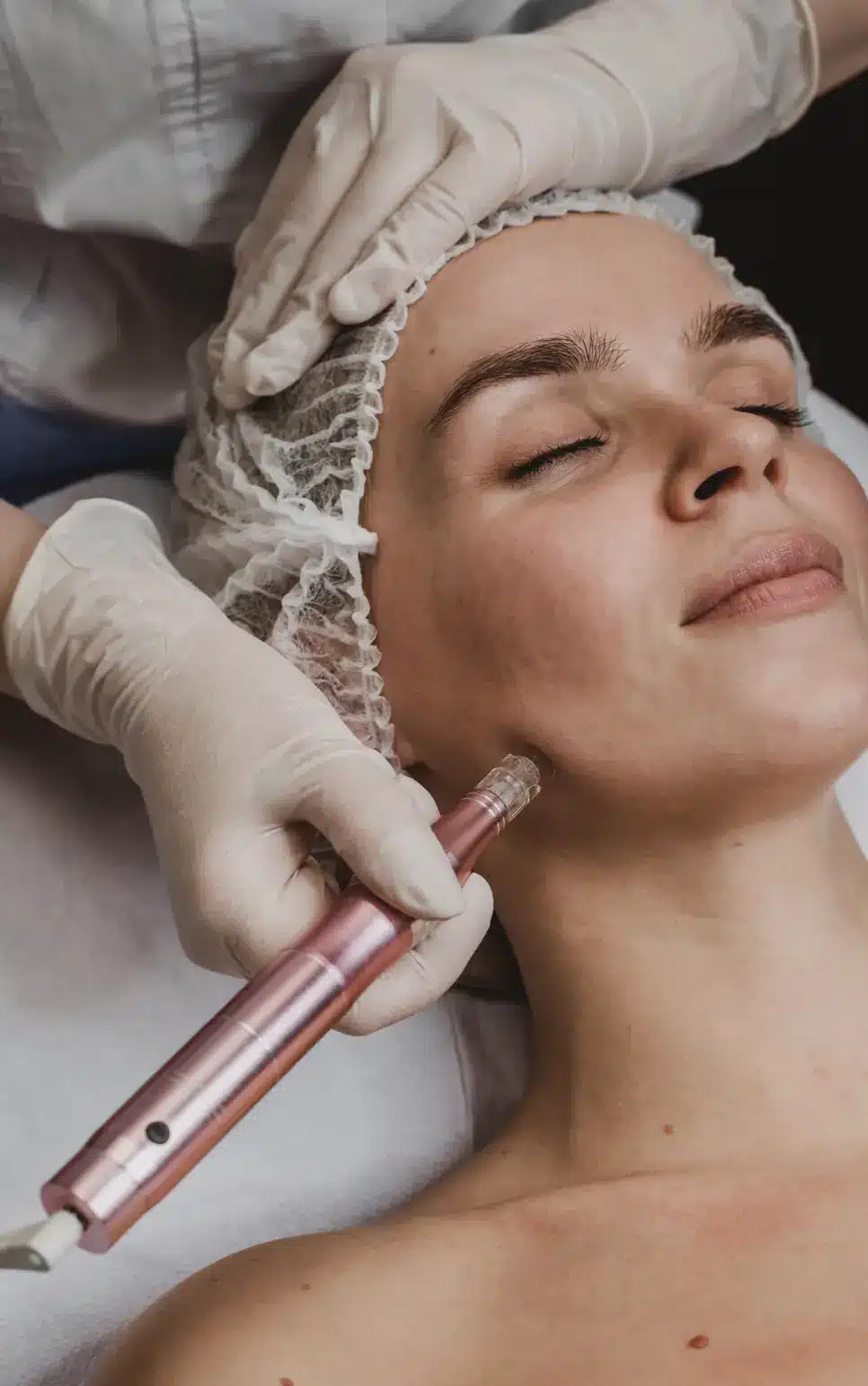
What You Actually Need to Compare: The Device, Depth, and Technique
Your results ultimately come down to how precise, consistent and skilled your dermal therapist is – not the fancy name they slap on the treatment. The real difference maker is the depth of the needles – are you going for product absorption, or is this a deeper treatment for scars and more?
What Really Matters is the Tech Behind It
The outcome of this treatment is more about:
- How deep you’re getting with the needles (0.25mm to 2.5mm – a pretty big range)
- Whether the device is stamping out the treatment evenly or not
- If your therapist actually knows what they’re doing, is this a cosmetic or medical treatment?
- How well you’re looking after your skin before the treatment
- How good are you at sticking to the aftercare routine
- What type of serum are you receiving (vitamins or bioactive ingredients)?
The device’s quality determines how smoothly the needles glide in, how consistent the depth is, and how much your skin is stimulated to produce collagen. This is also why understanding how to prep your skin before any cosmetic procedure matters just as much as the device being used.
A Quick Look at How Device Quality Impacts Outcomes
| Factor | Basic Skin Needling (Roller) | Advanced Microneedling (Pen) |
|---|---|---|
| Precision | Moderate | Excellent |
| Depth control | Low | High |
| Comfort | Dragging sensation | Smooth stamping |
| Downtime | 2–4 days | 1–2 days |
| Hygiene | Reusable tool → higher contamination risk | Sterile single-use cartridges |
| Results | Mild–moderate | Moderate–significant |
| Suitability | Beginners | Ageing skin, acne scars, scar reduction |
Clinics that switch from rollers to pens often see a 20-40% increase in collagen density over 3-6 months, according to clinical data from multiple microneedling manufacturers.
What Microneedling -or Skin Needling- Can Actually Do For You
Remarkably, this single treatment can effectively serve clients in their 20s who are just starting to think about prevention, all the way through to clients in their 50s who are looking to give their collagen a serious boost.
Why It's Such A Favourite Among Dermal Therapists
Microneedling is a go-to treatment for a reason: it can help tackle a wide range of skin concerns and works really well when paired with other non-invasive treatments.
It can help with:
- Reducing the appearance of fine lines and wrinkles
- Diminishing acne scars and scar tissue
- Smoothing out enlarged pores
- Sorting out uneven skin texture
- Slowing down the early signs of skin ageing
- Managing pigmentation (with a bit of TLC)
- Reducing the appearance of stretch marks
- Addressing mild skin laxity or the early signs of skin tightening
Clients often comment on how their skin feels “bouncier” – that’s the collagen doing its job!

So What Can You Expect When You Try Microneedling?
No beating around the bush here – here’s the lowdown on what to expect
Day 1:
It’ll feel a bit like having a sunburn – warmth, tightness, and pink to red skin.
Day 2:
The pinkness will start to fade, but the skin may feel slightly dry and textured.
Day 3-4:
Some flaking will set in – try not to pick at it! The skin is just repairing itself.
Day 5-7:
Now things start to look up – your skin will begin to glow, and your makeup will start to sit better.
Week 3-6:
Collagen production and cell turnover will ramp up.
Months 3-6:
This is where the real magic happens – deep collagen remodelling will leave you with firmer, clearer, smoother skin.
Let's Get Real - No Treatment Is Completely Risk-Free
Microneedling is generally safe, but it’s not for everyone.
If you have any of the following, you might want to hold off or delay:
- Active acne or an ongoing infection
- Severe rosacea
- Dermatitis or eczema that’s flaring up
- A fresh sunburn
- Recent injectables (check the timing)
- Skin that’s prone to keloids
A good dermal therapist will always do a thorough assessment before performing microneedling.
How Often Should You Book In For Treatment?
- Every 4-6 weeks for corrective results
- Every 8-12 weeks for long-term rejuvenation
- Every 6 weeks for acne scars or deeper scar tissue remodelling
Your skin therapist will work with you to develop a plan tailored to your skin concerns, age, and lifestyle.
Typical Price Ranges
- Cosmetic microneedling: $200-$350 per session
- Medical needling: $300-$450 per session
- Add-ons (LED, serums, PRP): $40-$300
Prices can vary depending on the depth of treatment, the type of serums used and your clinician’s experience.


Other Treatments to be Aware Of
You’ve likely come across numerous similar-sounding treatments online, such as nano needling, RF microneedling, Fractional RF Needling, radiofrequency microneedling, and more. We’ve put together a simple overview to help you navigate this sea of options and avoid searching for them all at midnight. You’ll often see carbon laser peel before and after comparisons online too, which focus more on surface brightening rather than deep collagen stimulation.
RF Microneedling / Fractional RF Needling
This is microneedling with a boost of radiofrequency energy, which heats deeper layers to promote skin tightening. It’s great for…
- Tightening up your jawline
- Reducing deeper wrinkles
- Firming up lax skin
- Dealing with severe acne scars
It’s different from standard microneedling in that it’s more profound, more intense – and more expensive.
Nano Needling
This treatment uses tiny silicone tips instead of needles, so that you won’t need any downtime. It’s ideal for applying serums or for a hydration boost. The key point is that it doesn’t stimulate collagen production; it doesn’t stimulate collagen, asmedical needling does.
Platelet-Rich Plasma (PRP)
The “vampire facial” treatment, where your own plasma is applied during the treatment to give a boost to wound healing and collagen stimulation.
Cosmetic Needling vs Medical Needling
Cosmetic needling: typically up to 0.3mm deep, just to improve product absorption. Medical needling: deeper (up to 2.5mm), targeting scars and deeper wrinkles
PDO Threads
This is a whole different ball game – it involves dissolvable threads being inserted into the skin to lift it, not just to puncture it.
Dermal Pens vs Dermal Rollers
Derm Pens are more precise and consistently outperform rollers, which require dragging the product across the skin.
Some Final Thoughts (And a Word of Advice)
Microneedling vs Skin Needling: what’s the real difference? Honestly – just the name. What really matters is the technique, the device and the clinician guiding your treatment plan. It’s the same reason our clients at Cosmetic Tattoo Studio Melbourne Face Figurati trust us not just for tattoos, but for long-term skin health treatments. When you understand how to look after your skin first, every treatment — whether it’s collagen induction therapy or something like lip liner cosmetic tattoo — will give you better results that last.

Beauty Treatments Expert
At my studio of cosmetic tattooing, I’m often asked, “Microneedling vs Skin Needling: What’s the Real Difference?” In practice, the terms are often used interchangeably, as both treatments stimulate collagen production through controlled micro-injuries to the skin. The real difference usually comes down to device technology, needle depth, and the overall treatment protocol. When performed correctly, both approaches aim to improve skin texture, acne scarring, fine lines, and overall skin rejuvenation. My focus is always on choosing the safest, most evidence-based method for your skin type and goals — ensuring results that are both natural and long-lasting. – Olha Po
FAQ
Is microneedling really the same as skin needling?
Yep, in Australia, we just call it the same thing — collagen induction therapy. It’s similar to how people ask about combo brows meaning; different names often describe technique variations rather than completely different treatments.
Does microneedling hurt?
It can feel a bit scratchy – but numbing makes it perfectly manageable.
How long will it take to see results?
You’ll start to see some glow from 5-7 days in
Texture changes: 4-6 weeks
Complete collagen remodelling: 3-6 months
Can I do microneedling at home with a derma roller?
No, you won’t get the same level of collagen stimulation with a roller, and it can be a hygiene nightmare.
Is microneedling safe for all skin tones?
Yes — when done by trained professionals. Just like procedures such as eyelash enhancement tattoo, technique and practitioner experience matter more than the treatment name itself.