
Why Is a Patch Test Important?
Why is a patch test critical? The fact is – my answer to that question is the same as what I always tell my studio clients: doing a patch test isn’t some extra hassle – it’s actually one of the simplest ways to stop allergic reactions, unexpected skin sensitivities, or contact dermatitis flare-ups in their tracks – particularly when it comes to products you’d buy in a salon or professional setting.
Think of patch testing like dipping your toe in the water before committing to a new skincare product. Its job is to alert us to early warning signs of skin allergies and irritation, and before you know it, a sneaky hypersensitivity reaction might pop up skin allergies, skin irritation, and before you know it, a sneaky hypersensitivity reactionwhen you least expect it.
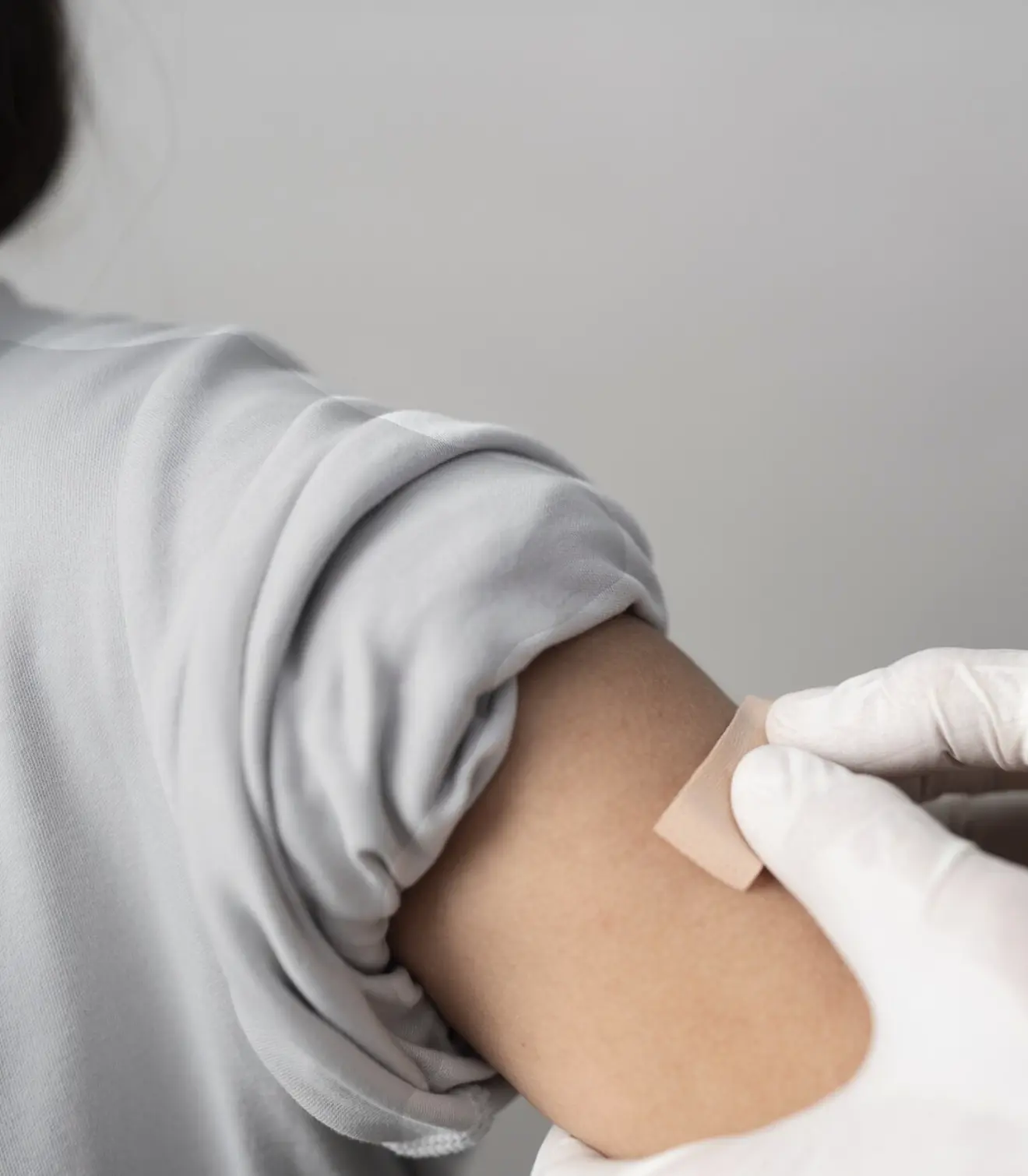
Table of Contents

How Your Skin Reacts Before a Full Treatment
Before I even think about getting near something as potent as a tint, glue, or numbing cream, I want to know just one thing about your skin: how will it react under pressure? A patch test gives me a heads-up.
This test gently introduces your skin to a product in a highly controlled, low-risk way. Your body then basically tells me loud and clear whether it’s happy, irritated, or about to go into full red alert – no guessing, no winging it. I get a clear idea, and that’s just what I need in beauty and aesthetics.
Many reactions don’t occur overnight; some may take hours to appear, so I always recommend leaving a patch test for the full 24 to 48 hours. If your skin remains calm, you can proceed; if you react, that’s fine. You just dodged a full-blown reaction all over your entire face.
Why Skin Safety Comes First
A lot of my clients swear up and down that they’ve “never had any problems” – but suddenly they go and develop a hypersensitivity reaction, and it’s like nbd. Because your immune system can just as easily change its mind as can I. And then patch testing comes along and catches that early swing in your immune system.
Patch testing also protects you from:
- Those allergic reactions out of the blue,
- Flare-ups that look just like eczema,
- Delayed skin irritation,
- That lovely inflammation from an incorrect allergen choice,
- And all the long-term disruption to your skin barrier.
We perform patch tests before laser treatments, chemical peels, and hair removal for clients with very sensitive skin or known skin conditions. Anything that gets applied to your brows, eyes or the dermis just needs to be treated with kid gloves, I reckon.

Real Salon Proof That Skin Checks Matter
I’ve got heaps of stories to share, but two that always stick in my mind are:
The Surprise Tint Reaction
A regular client — no allergy history, no sensitivities — suddenly reacted after years of tinting. A simple patch test showed her skin had changed. That tiny patch saved her from swollen brows before a big work event.
Pigment Sensitivity
I once had a new client come in who was really keen for a brow tattoo refresh. She wanted rich, bold colours, but her patch test revealed a sensitivity to a warm pigment range. Lucky I swapped it out for a different formula right away, and she healed perfectly – could’ve been a right old disaster otherwise. At Cosmetic Tattoo Studio Melbourne Face Figurati, you really only need one bad reaction to know patch testing is a no-brainer and genuinely a lifesaver.
Common Treatments That Require Skin Safety Checks
We patch-test everything that will come into contact with your skin and remain there, especially around the eyes.
Some of the services that need patch testing are:
- Brow tinting and lash tinting
- Lash lifts with the special bonding lotions
- Brow lamination products
- Henna brows
- All peel solutions
- Numbing agents
- Microneedling serums
- Lash extension adhesives
- All your pre-care and aftercare skin care products
- Tattoo pigments
- Hair removal creams
If it comes into contact with your skin and remains there, we perform a patch test.

How Skin Reaction Testing Works
When we apply a small amount of product to a patch on your skin, your immune system decides whether it’s a good guy or a bad guy. If it chooses the latter, you’ll see some signs of allergic contact dermatitis – mild swelling, itching, or redness.
The systems we use in practice also take into account:
- Active sensitisation – your immune system becomes allergic due to repeated exposure
- Excited skin syndrome or “angry back” – when previously irritated skin goes off again due to new stuff
- Reading and evaluation of the patch results after 30 minutes, 24 hours and 48 hours
- Standard Series and patch test panels that dermatologists use to figure out what the culprit chemical allergen is
We keep it simple in the studio: a tiny bit of product sealed with a dot of petroleum jelly if needed, applied carefully and left alone. No guesswork, no drama.
Statistical Snapshot: Why Allergic Testing Matters
Here’s a simple evidence-based overview reflecting dermatology statistics:
| Issue Tested | Approx. Incidence Among Cosmetic Product Users | Why It Matters |
|---|---|---|
| Allergic reactions to tint ingredients | 0.1–1% | Brows and lashes sit on delicate skin prone to irritation. |
| Adhesive reactions from lash extensions | Up to 5% | Adhesives contain potent chemicals that may cause skin irritation. |
| Peel-related irritation or dermatitis | 1–3% | Active acids require caution on sensitive or compromised skin. |
| Pigment sensitivities | <1% | Reactions in the dermis are more complex to manage. |
Even small percentages pose a real risk when applied around the eyes or in tattooed skin.
Preparation
Preparation is one of the most overlooked parts of treatment planning, especially if you’re learning how to prep your skin before any cosmetic procedure safely. To help us get the best results, here’s what to do before your patch test:
Before Your Test:
- Avoid using exfoliants, peels, or retinol
- Don’t get a fake tan on your upper forearm (just for the test; we know it’s hard to resist a tan!).
- Keep your skin clean and dry – don’t even think about a shower before your test
- Let your therapist in on any skin conditions you have, or if you’ve had any reactions in the past
- And, for goodness sake, keep heavy lotions away from the test area
During the Test:
We apply a minimal amount of product, often covered with a small adhesive patch. You leave it on for 24 to 48 hours – that’s it.
After the Test:
Look out for these signs:
- Redness, irritation, or bumps
- Itching
- Any warmth
- Delayed swelling
If you’re feeling any discomfort, apply a small bit of soothing gel and let us know – we’ll take care of it.

What Happens If You Have a Reaction?
Don’t panic – a reaction just means your skin is trying to tell you something. If someone reacts, we work with them to figure out what went wrong:
- We try alternative formulas and discuss future options, including saline tattoo removal approaches if pigment compatibility becomes a concern.
- Get rid of any specific chemicals that might have caused the reaction
- Switch to gentler products
- Avoid treatments that might irritate the skin
- Take a closer look at the ingredient list to find out what’s causing the problem
- We might also put off any further treatments until the irritation has cleared up
My job is to keep your skin safe – not to push you along.
Pre-Treatment Skin Screening
With cosmetic tattooing, pigments penetrate deeper into the skin, making reactions harder to correct. That’s why we always do a patch test with the pigments, any numbing creams, and aftercare products.
This helps us avoid:
- Localised dermatitis
- Fading or retention issues with the tattoo
- Scarring risks
- Unnecessary inflammation
- Delayed healing because of a hypersensitivity reaction
It’s a little test for a significant investment in your brow or lip tattoo. If you plan to undergo a cosmetic tattooing procedure at Face Figurati, we’ll review your pigment options to ensure you achieve the best possible results without causing inflammation.


Skin Safety Specialist
Since 2016, Olha Po has worked in the professional tattooing and aesthetic industry in Melbourne, placing a strong emphasis on client safety, treatment preparation, and predictable results. As a certified and licensed specialist with qualifications across Europe and Australia, she understands the importance of identifying potential sensitivities before any cosmetic procedure. Her approach incorporates patch testing, careful consultation, and individual skin assessment to help minimise the risk of allergic reactions and unexpected skin responses. By tailoring every treatment to the client’s unique skin characteristics, she helps ensure safe healing, balanced results, and long-term treatment success.
FAQ
Do I need a patch test every time I come in?
If we’re changing up your products or you want to try some new ones, yeah – you’ll need one. Otherwise, we’ll just follow up on your history.
Can I still react even if I've never had a problem before?
Yeah – that’s the thing about skin allergies and sensitisation – even if you’ve never had a problem before, it’s still possible.
Does a patch test guarantee I won't react?
Unfortunately, nothing is a 100% guarantee, but it does significantly reduce the risk of allergic reactions or skin irritation.
Is a patch test painful?
No way – it’s just a tiny bit of product on the upper forearm or behind the ear.
When should I book my patch test?
At least 48 hours before your treatment – the sooner the better.